Healthy Living in Erding: Yoga Courses & Retreats
Healthy Living in Erding: Courses & Retreats (Planning for Upcoming Dates)
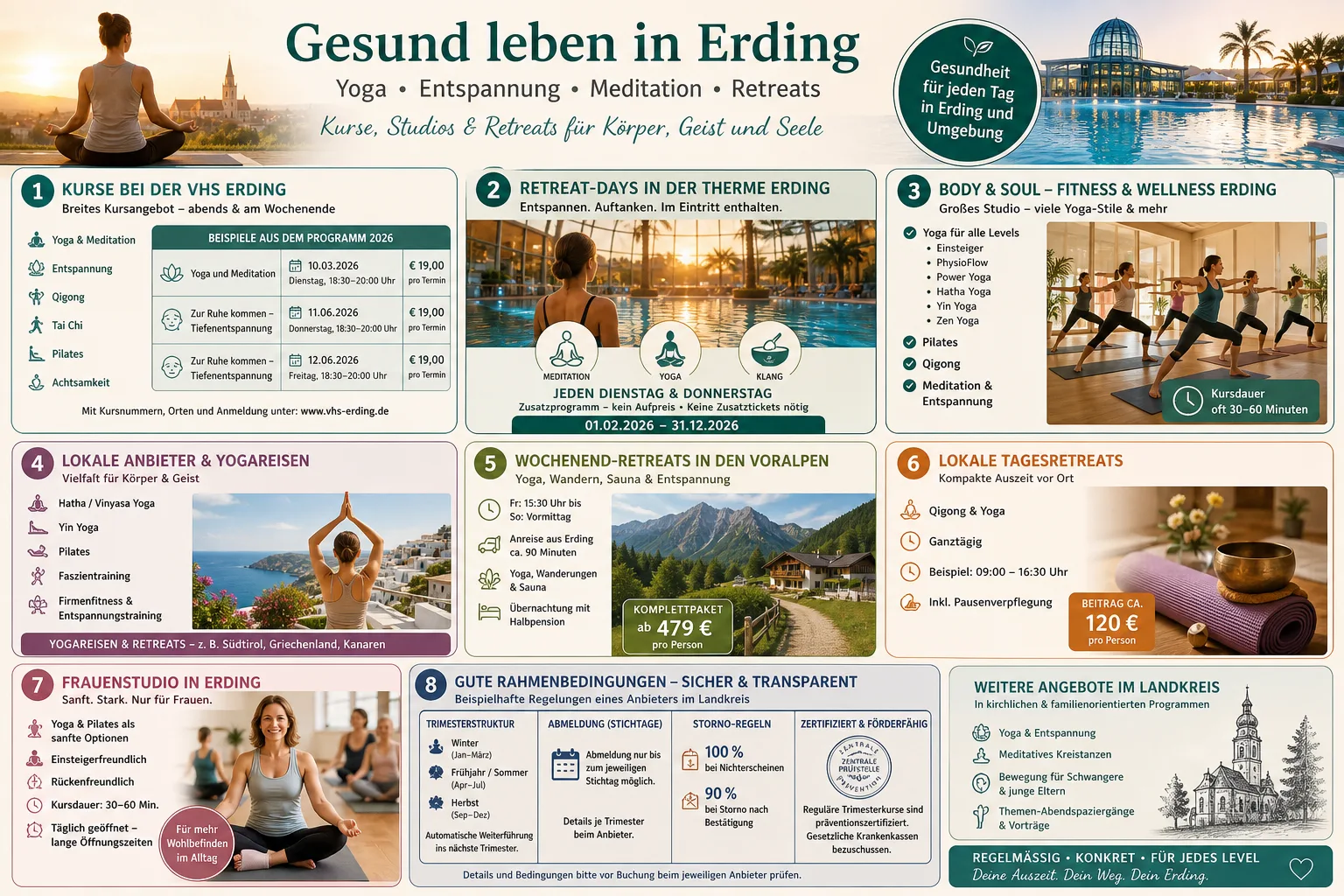
Erding offers numerous opportunities over the coming months to firmly integrate movement, relaxation, and mindfulness into everyday life: from yoga and Pilates courses to Qigong/Tai Chi and retreat formats – including options that can be combined with a visit to the thermal baths.
Why “healthy living in Erding” is often easier than you think
If you wish for more calm, flexibility, or stress relief in the coming weeks, you don’t have to organize a long trip in Erding. In and around the city, there are ongoing planned course series (mostly in the evenings or on weekends), open studio formats, and retreat-like additional units that you can use as day or weekend modules.
Important for reliable planning: Course schedules, start dates, and participation conditions change depending on the provider and season. Use this overview to select suitable formats, and then check the currently published dates directly with the organizer.
Health Courses in Erding: Yoga, Meditation & Relaxation
For starting a regular health routine, course series are particularly practical: They create commitment, teach basics, and are often designed so that beginners can participate safely.
Typical course formats frequently offered in upcoming programs
- Yoga (gentle to dynamic) with a focus on flexibility, strength, breathing, and body awareness.
- Meditation & Mindfulness (e.g., guided meditation, body scan, practical exercises for stress reduction).
- Relaxation units (e.g., breathwork, regenerative sequences, gentle stretching and rest forms).
- Back & Mobility Training as a preventive balance for sedentary work.
If you are just starting out, plan small, repeatable steps (e.g., 1 session per week over several weeks) rather than too many new formats at once. This increases the chance that the routine will stick even during busy times.
More than Yoga: Qigong, Tai Chi, Pilates, and Mindful Movement
Health training is not a one-size-fits-all concept. In and around Erding, in addition to yoga, other methods are often planned that cover different needs – from joint-friendly movement to structured strengthening.
What suits which goal?
- Qigong & Tai Chi: slow, flowing movements and conscious breathing. Well suited if you are looking for something calm for the coming months that addresses concentration, posture, and coordination.
- Pilates: systematic training of core and stabilizing muscles. Useful if you want to strengthen your core and prefer a clear exercise structure.
- Mindfulness Courses: Focus on stress competence, perception, and dealing with stress. Practical if you need mental clarity and everyday tools.
Practical combination plan for the next few weeks
- 1x/week a movement format (yoga or Pilates).
- 1x/month a longer relaxation/mindfulness format (workshop, themed evening, or longer session).
- In between 5–10 minutes micro-routine at home (breathing exercise, short mobilization).
Safety note: If you have acute complaints, pain, pregnancy, or medical restrictions, clarify participation in new training forms in advance with medical professionals and talk to the course instructor early about adjustments.
Studios and Centers: From Beginner Courses to Flow-Oriented Training
In addition to public programs, studios and specialized providers in Erding usually plan schedules with different intensity levels. This is helpful if you want to stay flexible or try different styles.
Styles and intensities you will often find in upcoming course schedules
- Beginner-friendly units with basic techniques and variations.
- Hatha/classically oriented sessions with a clear focus on posture, breathing, and clean execution.
- Vinyasa/Flow-oriented sessions with dynamic sequences (more athletic).
- Yin/Regeneration formats with longer, calm positions and relaxation.
- Therapeutically inspired offerings (e.g., focus on mobility, back, gentle stability) – depending on the instructor’s qualifications.
For a good decision before booking: Pay attention to the qualification of the instructor, the description of the target group (beginners, intermediate, athletic), and whether alternatives are offered for complaints.
Retreat Elements in the Thermal Bath: Relaxation Units as Day Modules
In Erding, relaxation can often be integrated into a day plan particularly easily, as thermal and wellness offers can be combined with additional program points. Depending on the operator’s publication, additional units such as meditation, gentle movement, or sound/relaxation offerings are added to the daily program on selected days.
For your planning: Check the current program information (weekdays, times, participation conditions, and area/location within the facility) directly with the operator before your visit, as content and times can be adjusted seasonally.
This is how you make it a “mini-retreat day” (for upcoming visits)
- Set in advance: 1–2 program points (don’t overplan the whole day).
- Include rest windows: at least 20–30 minutes of relaxation after each unit.
- Finish with low stimulation: end the day calmly (e.g., relaxation area instead of more activities).
Weekend Retreats & Time-Outs: Nearby (Pre-Alps) or as Travel Formats
If you need a targeted break from everyday life in the coming months, weekend formats are often the best compromise: noticeably relaxing, but without long vacation planning. Around Erding, retreats are typically organized towards the Pre-Alps; additionally, there are travel formats where daily practice is combined with nature or cultural programs.
What you should pay attention to in future retreat offers
- Program structure: How many units per day? Are there real breaks?
- Level of requirements: Is it suitable for beginners? Are options offered?
- Services: Are accommodation, meals, transfers, admission/extras transparently listed?
- Cancellation & rebooking rules: Check deadlines and costs in writing before booking bindingly.
- Health & limits: Plan realistically for more intensive programs (lots of movement/heat/hiking).
If you don’t want to stay overnight, day formats (e.g., longer workshops or compact retreat days) are often a good alternative: You get depth and focus, but stay in your familiar environment.
Booking, Costs & Health Insurance: How to Plan Reliably
So that health courses and retreats don’t become a source of stress in the coming weeks, a quick check before booking is worthwhile. Many providers work with fixed course periods (e.g., seasonal blocks) and clear participation conditions.
Checklist before registration
- Dates & duration: Does the period realistically fit your calendar?
- Catch-up options: Are there replacement dates in case of illness/vacation?
- Cancellation/No-show: What fees apply for short-term cancellation or no-show?
- Transparency: Are prices/services clearly itemized (including additional costs)?
- Suitability: Is it explained who the offer is intended for (e.g., beginners, back, pregnancy)?
Health insurance subsidy (prevention courses) – what you can check in the future
Some courses can be recognized as prevention courses. Whether and to what extent reimbursement is possible depends on your statutory health insurance’s conditions (e.g., minimum attendance and proof). Check before the course starts:
- Is the course designated as a prevention offer (including proof/certification)?
- What reimbursement rules apply to your health insurance?
- What documents do you need after the course (certificate of attendance, invoice)?
Healthy Living in Erding: A Realistic Plan for the Next 30 Days
If you start today, a simple, well-planned routine is often more effective than a perfect one. For the next 30 days, you can follow this approach:
- Choose a core format (yoga, Pilates, Qigong, or mindfulness) that you can reliably do once a week.
- Try a second, complementary format once (e.g., a workshop or an open studio session) to find your favorite.
- Plan a recovery island: a thermal/wellness day or a quiet half-day block without obligations.
- Evaluate after 4 weeks: What noticeably benefits you (sleep, stress, flexibility)? Only then adjust the intensity.
This creates a health style that fits your everyday life – and that you can continue steadily over the coming months.