Magnus Kleine-Tebbe
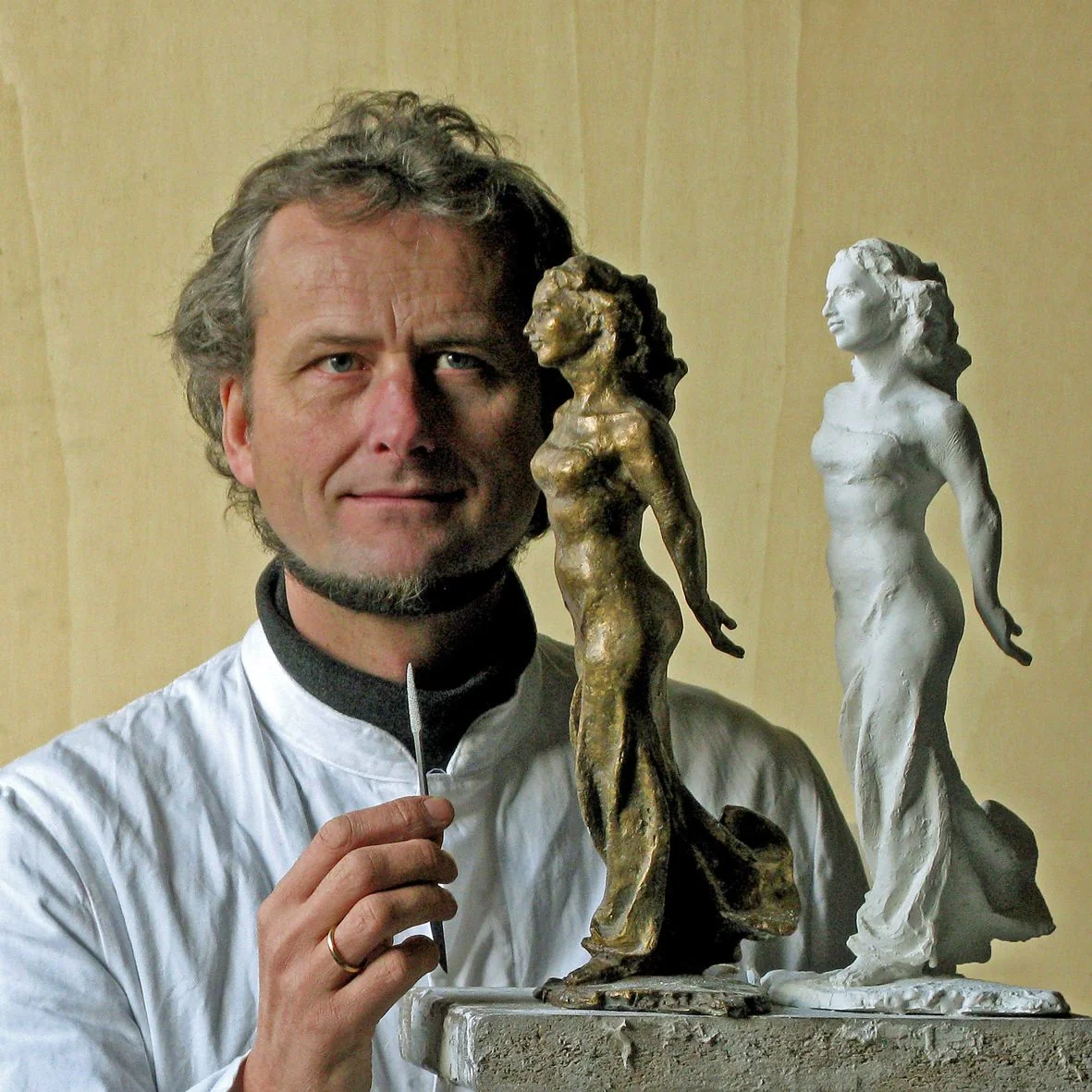
Image from Wikipedia
Image from Wikipedia
Magnus Kleine-Tebbe: Figurative Sculpture between Realism, Craftsmanship, and Christian Iconography
A sculptor from Bremen who developed a distinctive artistic signature in Braunschweig
Magnus Kleine-Tebbe, born on May 4, 1966, in Bremen, is among the German sculptors whose work is consistently committed to realism. For decades, he has been working with a clearly recognizable connection of figurative precision, material-conscious craftsmanship, and an iconography that often refers to Christian and ancient themes. His sculptures and models emerge from a tension field of observation, modeling, and thematic condensation. ([de.wikipedia.org](https://de.wikipedia.org/wiki/Magnus_Kleine-Tebbe?utm_source=openai))
Those who delve into the work of Magnus Kleine-Tebbe discover not a loud self-promoter, but an artist whose work convinces through concentration, discipline, and thematic depth. The sculptor lives and works in Braunschweig, creating both figurative and abstract works in terracotta, plaster, wood, stone, bronze, and steel. His artistic development is closely linked to classical studies of form, artisan proficiency, and a strong orientation towards public commissions. ([magnus-kleine-tebbe.de](https://www.magnus-kleine-tebbe.de/index.php?utm_source=openai))
Biographical Roots: Training, Studies, and Formative Stations
Kleine-Tebbe's career began with an internship at the art foundry Lenz und Jahn in Nuremberg. In 1988, he began studying Free Sculpture at the Academy of Fine Arts Nuremberg, initially in the class of Christian Höpfner, later with Wilhelm Uhlig, from whom he graduated as a master student with honors in 1993. This academic foundation profoundly shaped his confident handling of form, proportion, and plastic composition. ([de.wikipedia.org](https://de.wikipedia.org/wiki/Magnus_Kleine-Tebbe?utm_source=openai))
Another significant step in his development followed in 1993/94 as a guest student at the Marble Laboratory SGF Scultura of the Accademia di Belle Arti di Carrara, supported by the Evangelische Studienwerk. From 1994, Kleine-Tebbe worked in Braunschweig, including until 2000 as a research associate at the Institute of Elementary Forms under Jürgen Weber at the Technical University of Braunschweig. This phase combined research, teaching, and practice, sharpening his insight into the relationship between form, space, and human physiognomy. ([de.wikipedia.org](https://de.wikipedia.org/wiki/Magnus_Kleine-Tebbe?utm_source=openai))
The Path to Free Sculpture and Building a Diverse Oeuvre
Since 2001, Magnus Kleine-Tebbe has been working as a freelance sculptor. Concurrently, he took on teaching assignments, including at the Education Center for Stone Masonry and Sculpture in Königslutter and at the University of Fine Arts Braunschweig. His pedagogical work included freehand drawing, modeling, design, and styles of architecture; with this, he not only imparted knowledge but also consolidated his own position as an artist with artisan authority. ([de.wikipedia.org](https://de.wikipedia.org/wiki/Magnus_Kleine-Tebbe?utm_source=openai))
His work encompasses portraits, nudes, free forms, landscapes, spatial planning, architectural elements, and technical constructions. Kleine-Tebbe works not only in the studio but also for public spaces and for private as well as institutional clients. It is precisely this connection of artistic ambition and spatial impact that makes his works visible and permanently present in Braunschweig and beyond. ([magnus-kleine-tebbe.de](https://www.magnus-kleine-tebbe.de/?utm_source=openai))
Material, Technique, and Composition: The Signature of Realism
The spectrum of materials used by Magnus Kleine-Tebbe is remarkably broad: terracotta, plaster, wood, stone, bronze, steel, and concrete are part of his repertoire. His website emphasizes the importance of freehand drawing and CAD design as starting points before the physical realization begins. This methodical approach reflects an artist who does not romanticize traditional work processes but organizes them precisely and connects them with contemporary design forms. ([magnus-kleine-tebbe.de](https://magnus-kleine-tebbe.de/?utm_source=openai))
His strength in the figurative area becomes particularly evident. Kleine-Tebbe works with a pronounced sense of physiognomy, posture, and inner tension; his portraits arise from conversations, drawings, photographs, and several modeling phases in clay or wax. An art historian's perspective on his work shows that it is not merely about resemblance, but about character, presence, and the slow emergence of an individual form. ([magnus-kleine-tebbe.de](https://www.magnus-kleine-tebbe.de/?utm_source=openai))
Additionally, he has a pronounced interest in material properties. On his website, Kleine-Tebbe highlights the fascination of stone, wood, and bronze, describing the influence of polish, grain, tool marks, and surface on the effect of a sculpture. This combination of sensual material observation and strict formal order lies at the core of his artistic quality. ([magnus-kleine-tebbe.de](https://www.magnus-kleine-tebbe.de/Werkbeispiele/Stein/?utm_source=openai))
Important Works, Commissions, and Public Presence
Among the documented works are early and later examples that attest to Kleine-Tebbe's thematic range: the marble sculpture "Eheblock" for the Evangelische Studienwerk Haus Villigst, the work "Laodizea" for the Technical University of Braunschweig, the pair of sculptures "Rut und Boas" in Wolfsburg-Vorsfelde, and the work "Maria mit Kind, Frau mit Taube" in the garden of the HEH Braunschweig hospital. Such works illustrate how closely his oeuvre is connected to places, institutions, and specific commissions. ([magnus-kleine-tebbe.de](https://www.magnus-kleine-tebbe.de/Person/auftragsliste.php?bereich1=person&bereich2=person_auftragsliste&utm_source=openai))
Religious and symbolically charged works also play a central role. His website and the Wikipedia description mention sculptures like "Solus Jesus Christus," "Sola Scriptura," "Sola Gratia," or the saint sculptures for St. Martinus in Nottuln. Christian symbolism for Kleine-Tebbe is not just a motif but a foundational element of his visual world that brings together title, content, and form. ([de.wikipedia.org](https://de.wikipedia.org/wiki/Magnus_Kleine-Tebbe?utm_source=openai))
His works have also been presented in exhibitions and showcases, including in the Jakob-Kemenate, St.-Martini-Kirche, and the Braunschweig District Court. The exhibition from 1994 to 2009 documents the breadth of his production and emphasizes that his oeuvre has not grown sporadically but continuously. ([de.wikipedia.org](https://de.wikipedia.org/wiki/Magnus_Kleine-Tebbe?utm_source=openai))
Teaching, Mediation, and Artistic Authority
Magnus Kleine-Tebbe is not only a practicing sculptor but also a mediator of knowledge. In training aspiring stone masons and sculptors, he taught freehand drawing, modeling, and styles of architecture; later, styles of construction were added. This teaching activity points to a rare combination of practical experience, formal security, and pedagogical clarity. ([de.wikipedia.org](https://de.wikipedia.org/wiki/Magnus_Kleine-Tebbe?utm_source=openai))
His own artistic attitude is described on the website as open, communicative, and driven by tireless creativity. The art historian Claudia Müller emphasizes that Kleine-Tebbe seeks to touch people with his works and engages sensitively in dialogue with others and the happenings around him. This creates the image of an artist who not only creates forms but establishes connections between work, space, and viewer. ([magnus-kleine-tebbe.de](https://www.magnus-kleine-tebbe.de/?utm_source=openai))
Artistic Development, Cultural Influence, and Thematic Depth
At the center of Kleine-Tebbe's work lies a Christian-humanist concept of humanity, which is visible both in the Wikipedia description and on his own website. Ancient mythology, biblical themes, and concrete local references comprise the thematic fields from which he develops his sculptures. His art thus appears both tradition-conscious and contemporary, as it conveys universal motifs through clear, understandable forms. ([de.wikipedia.org](https://de.wikipedia.org/wiki/Magnus_Kleine-Tebbe?utm_source=openai))
His cultural influence primarily lies in public spaces. Sculptures in churches, universities, clinics, and municipal settings make his work accessible to a broad audience. This visibility gives his sculptural work a particular relevance: it does not remain in the studio but becomes part of everyday perception and collective memory. ([magnus-kleine-tebbe.de](https://www.magnus-kleine-tebbe.de/Person/auftragsliste.php?bereich1=person&bereich2=person_auftragsliste&utm_source=openai))
Technically, Kleine-Tebbe also shows himself to be an artist with a spirit of experimentation. The Wikipedia description mentions fiberglass in concrete, the adoption of new techniques, and the development of a permanently elastic marble modeling compound in three hardness levels as expressions of his drive. This openness to further development firmly anchors his work in the present and prevents realism from becoming a mere stylistic form. ([de.wikipedia.org](https://de.wikipedia.org/wiki/Magnus_Kleine-Tebbe?utm_source=openai))
Why Magnus Kleine-Tebbe Remains Interesting
Magnus Kleine-Tebbe combines classical sculpture with intellectual precision, material-conscious craftsmanship, and a distinctive, thematically charged visual language. His sculptures speak of human dignity, religious symbolism, and the power to transform form into meaning. Anyone interested in realistic sculpture, contemporary sacred art, and carefully crafted models will find in his work an artist of remarkable consistency. ([magnus-kleine-tebbe.de](https://www.magnus-kleine-tebbe.de/?utm_source=openai))
This connection of public presence, the depth of craftsmanship, and intellectual attitude defines his stature. Magnus Kleine-Tebbe is a sculptor whose work is not only viewed but experienced in space. His works deserve attention on-site, as only in direct confrontation do they unfold their full presence, plasticity, and inner tension. ([magnus-kleine-tebbe.de](https://www.magnus-kleine-tebbe.de/Person/auftragsliste.php?bereich1=person&bereich2=person_auftragsliste&utm_source=openai))
Official Channels of Magnus Kleine-Tebbe:
- Instagram: No official profile found
- Facebook: No official profile found
- YouTube: No official profile found
- Spotify: No official profile found
- TikTok: No official profile found
Sources:
- Magnus Kleine-Tebbe – Sculptor (official website)
- Magnus Kleine-Tebbe – Sculptor (homepage)
- Wikipedia: Magnus Kleine-Tebbe
- Magnus Kleine-Tebbe – Curriculum Vitae
- Magnus Kleine-Tebbe – Commission List
- Magnus Kleine-Tebbe – Examples of Works in Stone
- Magnus Kleine-Tebbe – Examples of Works in Wood
- Magnus Kleine-Tebbe – Example of Work in Bronze: Bathsheba
- PDF: The "four Soli" as sculptures for the Reformation
- PDF: Art Guide Villigst / Reference to Magnus Kleine-Tebbe
Upcoming Events
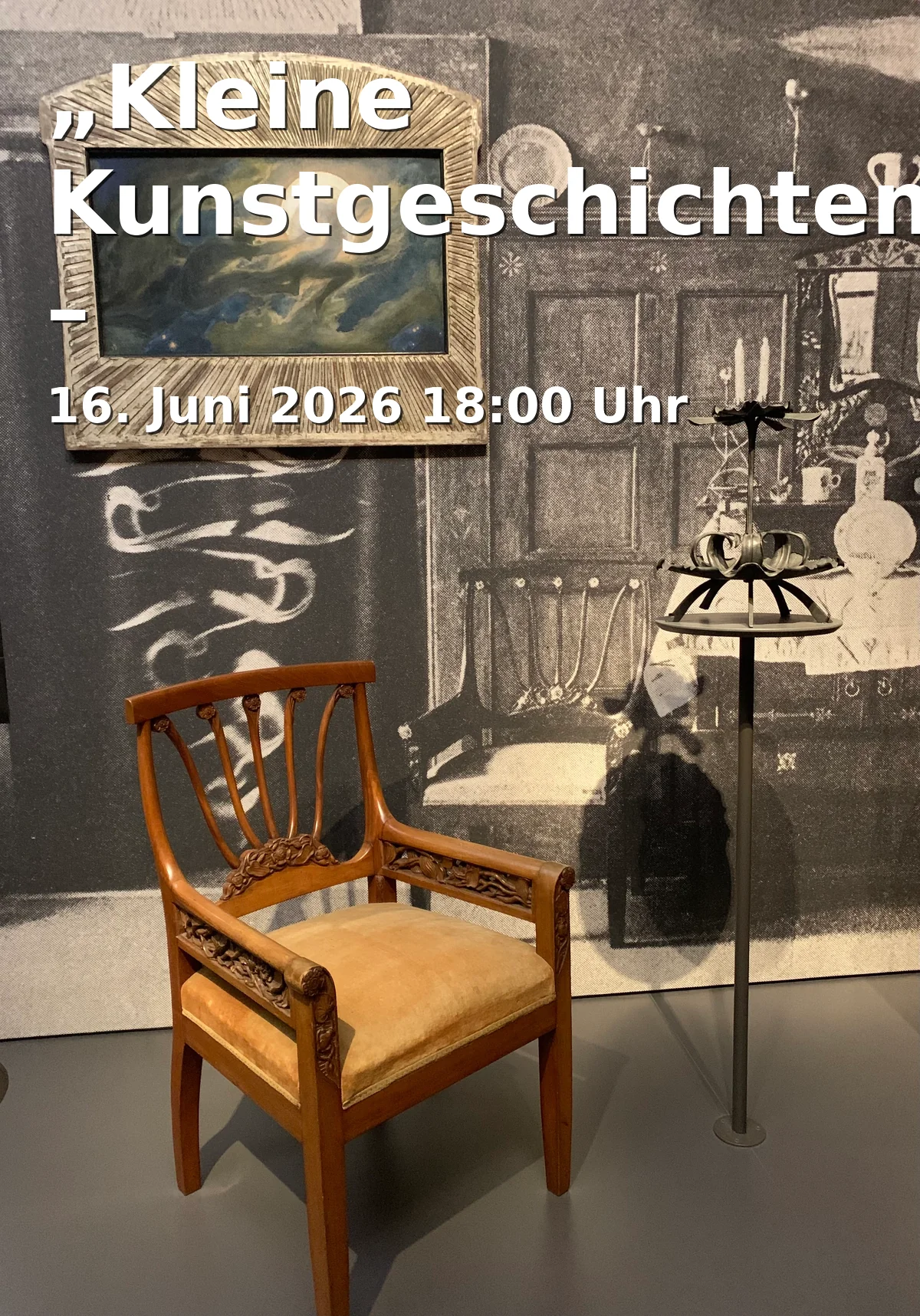
"Little Art Stories" – Art Observations with Claudia & Magnus Kleine-Tebbe
"Little Art Stories" – Art Observations with Claudia & Magnus Kleine-Tebbe