How Erding is Changing: New Cultural Venues in the District
How Erding is Changing – New Cultural Venues and Ideas
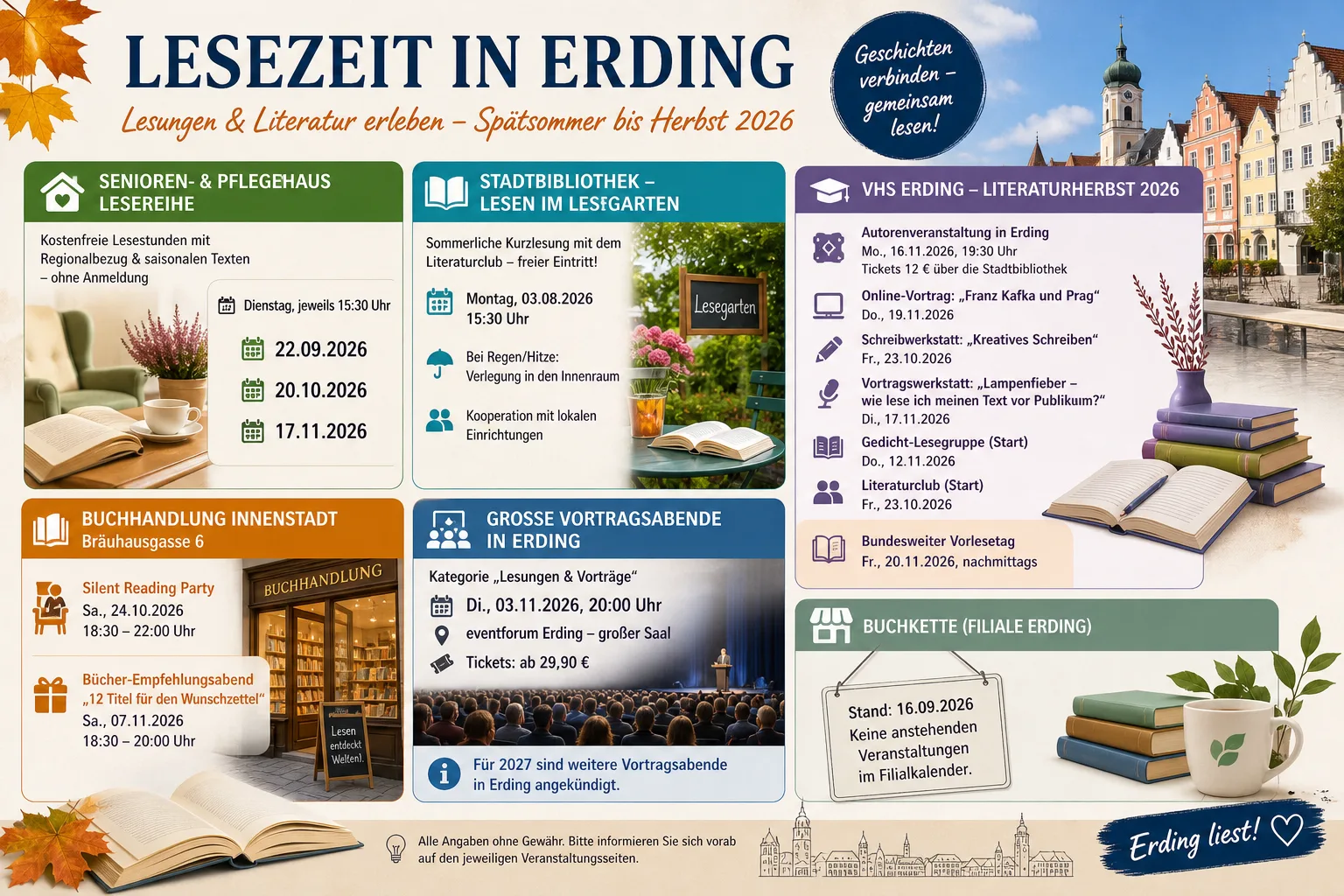
What does a city feel like when it reinvents itself as you stroll through its familiar streets? In Erding, this question will soon be answered in several places at once: between the old town and the new train station, in the emerging district on the former air base, and even in the thermal spa, where light and art will increasingly become part of the experience.
At a Glance: What Will Change in Erding
- The former air base is being developed into an urban, predominantly car-free district with housing, work, culture, and green spaces.
- A development axis will in the future connect the old town, the existing and new train stations, and the conversion area as a result of attractive urban spaces.
- The downtown strategy focuses on climate adaptation, the Green Ring, barrier-free paths, and new quality spaces by water and squares.
- Historic buildings – including a chapel and a distinctive tower – are being given new cultural functions.
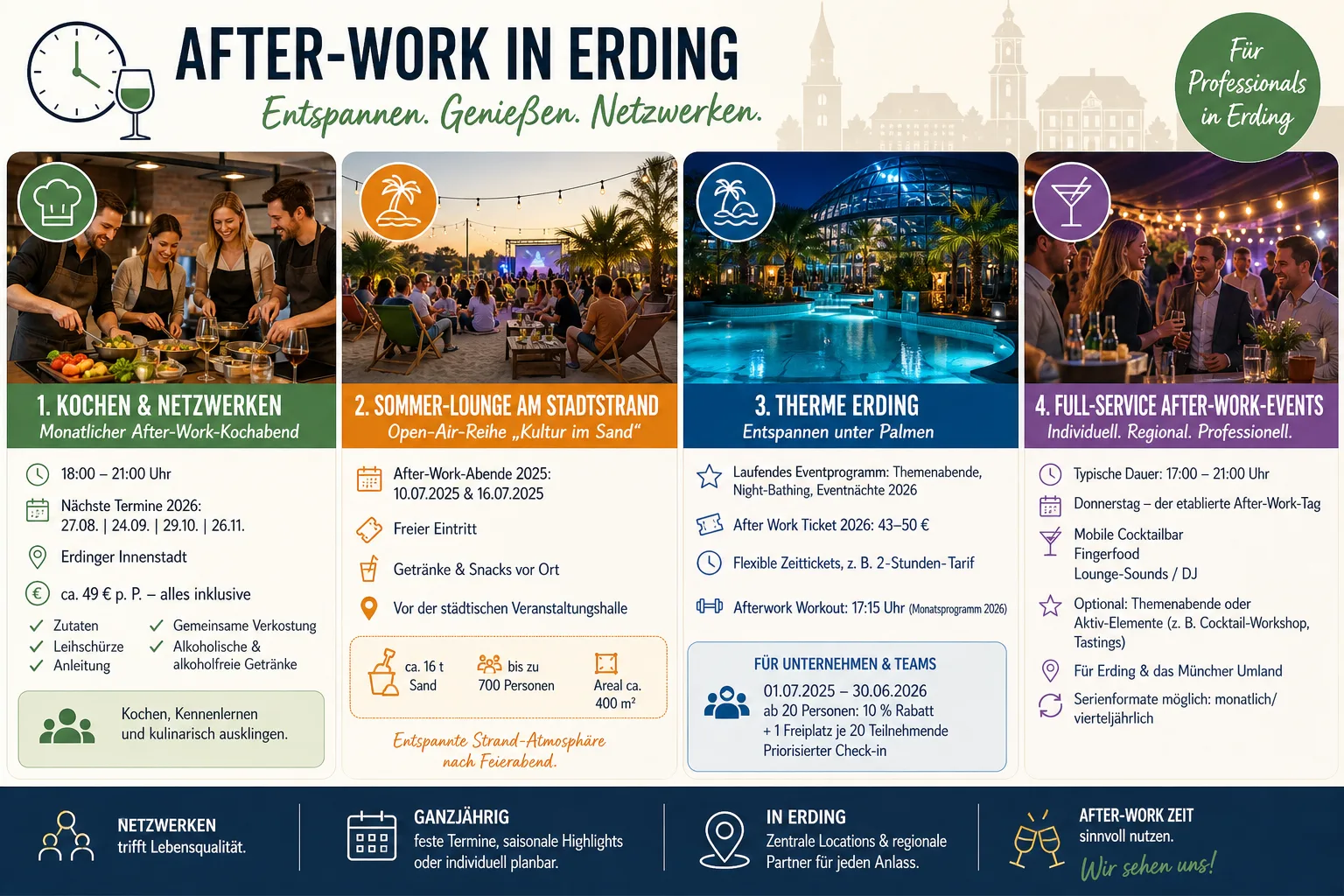
- The thermal spa on the outskirts is increasingly establishing art, light, and staging as a fixed part of its wellbeing concept.
- Participation and regional references strengthen a development that understands culture as part of everyday life.
From Air Base to District: A New Neighborhood Emerges
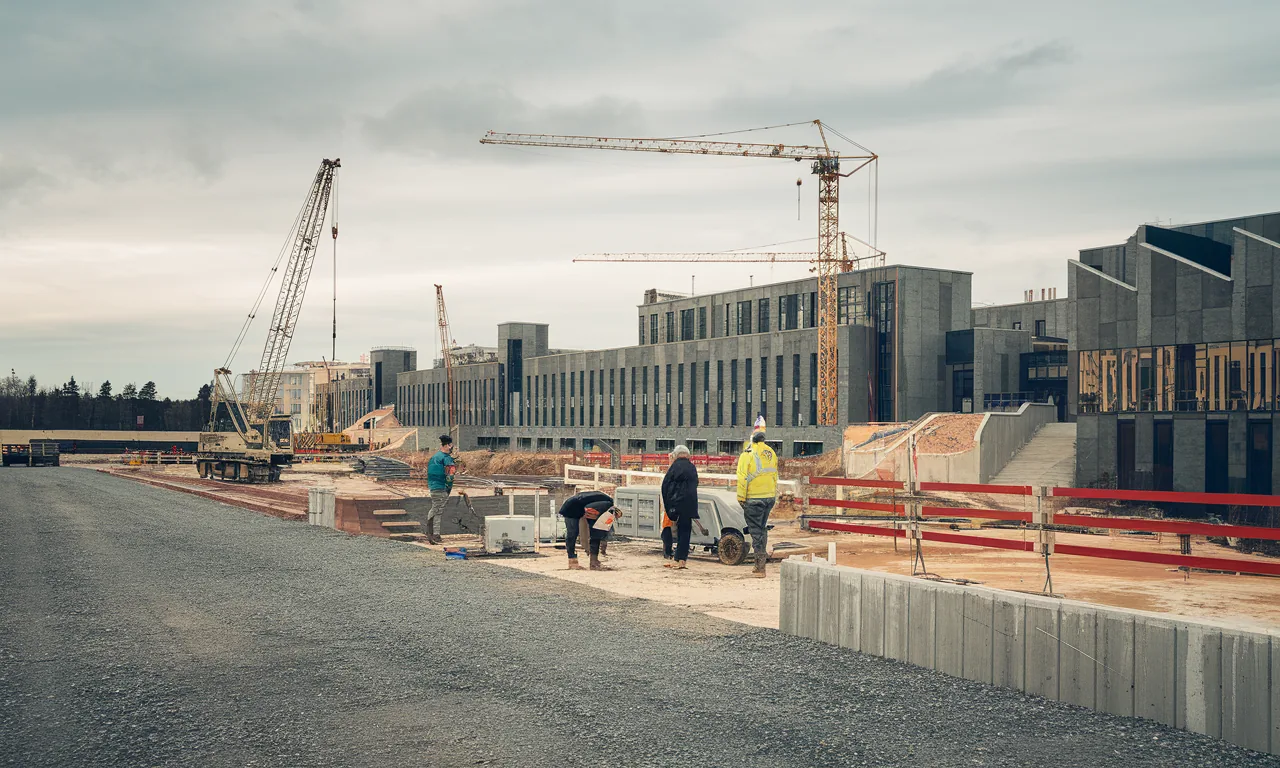
The conversion of the former air base site will fundamentally shape Erding in the coming years. A new district is planned for well over 6,000 residents and several thousand jobs in close proximity to housing, daily life, and leisure. The guiding principle is urban density, mixed uses, and predominantly car-free spaces.
A central, boulevard-like axis puts pedestrians, cyclists, and public transport at the center. It is conceived as a "linear living room" – with squares, cultural venues, gastronomy, and lots of greenery. The new train station will become a mobility hub for suburban and regional trains, linking the old town and the conversion area. This creates a cultural and logistical hinge that will noticeably ease routes between the old town, the new district, and the thermal spa in the future.
Characteristic existing buildings are being carefully integrated. Special focus is on a chapel built in 1948, which is intended as a future cultural space. Thus, a place of contemplation becomes a place of encounter: for exhibitions, readings, or small concerts – and as a visible bridge between past and future.
The neighborhood is oriented towards climate-resilient principles: interconnected green corridors, shade-giving trees, water-conscious open space design, and attractive routes for active mobility. From a previously isolated area, an open district is emerging where living, working, and culture are deliberately intertwined.
Development Axis Old Town–Station–District: Rethinking the Cityscape
The connection from the historic old town via the existing and future train stations to the conversion area is being expanded as the backbone of urban development. Instead of mere transit spaces, a sequence of urban spaces with high quality of stay is being created.
- Parking areas are gradually being transformed into squares with outdoor gastronomy, green islands, seating, and play areas.
- Experimental uses are planned along the axis: studios, shared workspaces, temporary cultural formats, creative housing forms, and gastronomic offerings.
- Early phases provide space for interim uses in the open air – as a living laboratory testing new forms of coexistence.
This way, an urban microcosm grows, closely linking culture, education, and work, making the axis a tangible connector between the old town and the new district.
Downtown Strategy: Public Spaces as the City’s Stage
With the integrated downtown strategy, climate adaptation, commerce, and urban spaces come into focus. A planned Green Ring will in the future connect existing green spaces and new areas for staying and will help cool the city during hot summers.
- Making the Sempt River tangible: A new terrace at the Green Market will bring the river more into city life – with seating steps, open spaces, and barrier-free access to the riverbank. The place is suitable for small cultural events, readings, and open-air concerts.
- Barrier-free paths: Streets and riverbank areas – for example at Rätschenbach – are being optimized for safe, comfortable walking and cycling.
- Water-conscious city: Surfaces are being designed so that heavy rainfall can be better absorbed and temporarily stored – combined with high quality of stay during dry periods.
- Reusing history: A distinctive historic tower is being given a cultural role, for example for art, tours, or smaller formats – as an identity-creating anchor.
- Station and transition areas: Zones around the station and the Mayr-Wirt area are being further developed into designed urban spaces with high quality of stay.
Thermal Spa as a Cultural Venue: When Wellbeing Becomes Staging
The large thermal and sauna bath on the outskirts is developing into a place where relaxation, staging, and art come together more strongly. Future focuses are on kinetic elements, light, and immersive sound-image spaces that interpret relaxation as a holistic experience.
Newly designed relaxation and sauna areas are deliberately combined with color and light concepts that support atmosphere and orientation. Additional cold and heat offerings expand the spectrum between activation and relaxation. Accompanying discussions about zones, usage rules, and cultural expectations will continue to shape the development – as a mirror of societal negotiation processes.
Regional Role Models and Participation: Culture as an Everyday Task
Experiences from neighboring communities – for example with reimagined town centers, community centers, and small parks – are flowing into Erding’s projects. They show how culture emerges as part of livable local development when greenery, short distances, and central meeting points are anchored in everyday life.
Erding relies on continuous participation: neighborhood walks, workshops, competitions, and exhibitions give the urban community the opportunity to contribute ideas and help prepare decisions. This creates a process in which administration and the public continuously explore how Erding should look and feel in the future.
How Erding Will Feel in the Future: Concrete Outlooks
- Culture in everyday life: Smaller exhibitions, readings, and concerts in the repurposed chapel and at new squares along the development axis.
- Short distances: Daily errands, leisure, and work move closer together – accessible on foot, by bike, or by bus and train.
- Green cooling: Shade, water access, and the Green Ring make summer in the city center more pleasant.
- Open spaces: Open areas are flexibly used for pop-up formats, markets, and encounters.
- Thermal spa experience: Light and sound stagings expand the classic wellness offering into cultural experience moments.
Notes on Classification
The measures and offerings described refer to planned developments. Content, designs, and processes will be finalized as part of formal procedures, available resources, and public participation. Changes and adjustments are possible.
Sources and Further Information
- City of Erding – Official Information — Urban development, participation, projects (accessed 2026-02-11)
- Bavaria – Urban Development Funding — Programs, guidelines, funding frameworks (accessed 2026-02-11)
- BBSR – Urban Development and Building Culture — Background and practical examples (accessed 2026-02-11)
- Therme Erding – Official Website — Offerings and stagings (accessed 2026-02-11)