Citizen Participation & Urban Development in Erding
Citizen Participation & Urban Development in Erding: What Steps Are Next
This overview summarizes which participation formats and planning priorities are likely to be the focus in Erding in the coming years – from downtown development to neighborhood processes to the conversion of the Fliegerhorst area.
Downtown: ISEK as a Framework for Next Measures
For the downtown area, an integrated approach will remain particularly relevant, as many goals interact there simultaneously: accessibility, commerce and services, quality of stay, accessibility for the disabled, as well as climate and rainwater management. In the coming years, the Integrated Urban Development Concept (ISEK) is likely to serve primarily as a guiding framework to set priorities and bring project ideas into an actionable sequence.
Which Topics Are Likely to Be in Focus
- Quality of Stay and Diversity of Use: Squares and street spaces should be designed so that they remain usable even during heat waves.
- Green and Open Space Networking: Route chains for pedestrians and cyclists should become more attractive and green structures should be better connected.
- Climate Adaptation: Measures such as unsealing, shading, and rainwater retention are expected to be more strongly integrated into street and square planning.
- Accessibility: In renovations and refurbishments, it is expected that accessibility and safe crossings will be planned early on.
How Participation in the Downtown Area Can Typically Proceed
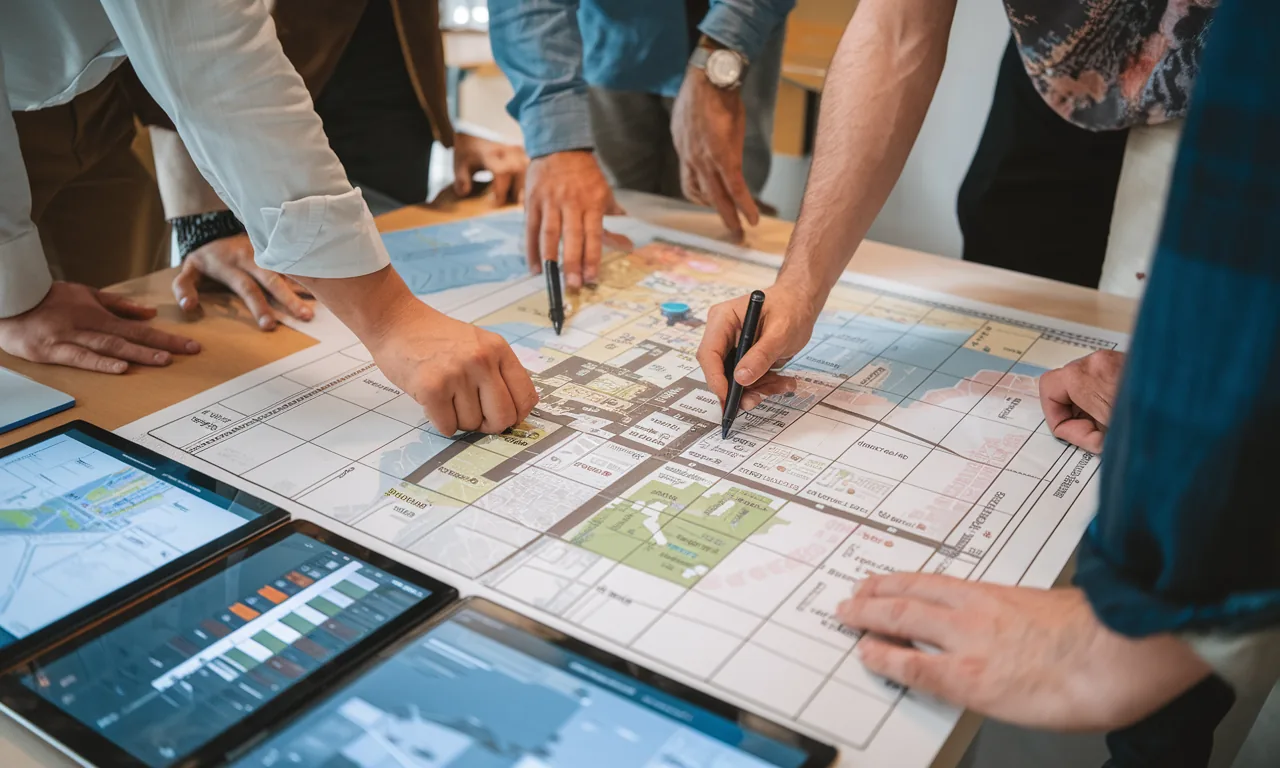
In future process steps, formats such as city walks, workshops, and public forums can be used to systematically translate local knowledge and everyday needs into designs. Particularly helpful is transparent documentation that makes visible:
- which suggestions have been received,
- which of them are incorporated into planning,
- and which cannot be implemented for technical or legal reasons.
An additional role in the future is likely to be played by connecting the downtown area with major mobility hubs: When new connections are created or transfer relationships change, downtown planning will likely be seen more as part of a network (walking, cycling, public transport, parking, delivery traffic).
Neighborhoods: Next Participation Steps in Klettham-Nord and Altenerding
Neighborhood processes will likely continue to be a central tool in the coming years, as they enable concrete improvements in the immediate environment. Participation and implementation are closely linked: Discussions and surveys should not be collected "for later," but should result in prioritized measures.
Klettham-Nord: Participation as an Ongoing Improvement Process
For Klettham-Nord, it is expected that participation will be most effective when tied to recurring occasions: for example, traffic calming measures, further development of play and recreation areas, or better connection of pathways. In the future, a neighborhood process can particularly benefit if it combines regular consultation hours, short feedback channels, and a clear priority list.
Altenerding: From Mood Picture to Verifiable Goals
For Altenerding, a viable next step will be to prepare feedback so that verifiable goals emerge from it. These include, for example:
- Path Connections: Where should crossings, lighting, or safe school routes be improved?
- Public Space: Which squares, stops, or green areas should be upgraded – and with what function?
- Everyday Mobility: Which routes should become continuously safe for cycling and walking, and how can goal conflicts be resolved?
To ensure that participation remains robust in the next phase, the results should probably be published in a comprehensible structure (topic clusters, evaluation logic, weighing criteria). This way, it remains clear in the further course which points are decided politically and which are technically mandatory.
Fliegerhorst: Conversion, Mobility, and New Connections
The conversion of the Fliegerhorst area will likely remain one of the most defining tasks for urban development in the coming years, as living, working, supply, open spaces, and mobility are to be newly combined here. For the next stages, it will be crucial that planning and participation steps are designed to remain understandable despite high complexity.
Which Questions Are Likely to Be Central in the Future
- Urban Design and Density: How are buildings, uses, and open spaces arranged so that a functioning district can emerge?
- Green Corridors and Climate Adaptation: How are fresh air corridors, shading, water areas, and unsealing anchored in the design logic?
- Mobility Concept: How are short distances, attractive cycling connections, and efficient public transport planned so that they are used in everyday life?
- Connection to the Entire City: How are transfer relationships, network edges, and transitions to neighboring areas designed?
How Participation Can Be Effective in Major Projects
In large-scale conversions, participation is likely to work best in the near future if it takes place in clear "decision windows." This means: The public receives not only general guidelines but also concrete options (e.g., for street spaces, green corridors, or mobility stations) with understandable pros and cons. In addition, dialogue formats with interest groups can help to identify conflicts early before they lead to delays in later approval and construction phases.
Participation Formats: What Procedures Could Look Like in the Future
For upcoming projects in Erding, a combination of analog and digital formats may be particularly suitable to reach different target groups. The following building blocks are often used in German municipalities and can – depending on the topic – also be useful in the future:
- Information Phase: understandable project pages, public kick-off events, visualizations of the initial situation.
- Dialogue Phase: workshops, moderated rounds, neighborhood walks, thematic forums (e.g., climate, mobility, commerce).
- Feedback: published result reports, weighing tables, understandable summaries for non-experts.
- Decision & Implementation: clear responsibilities, milestones, renewed participation in the event of significant plan changes.
For trust and transparency, it will be crucial in the future that participation not only "collects opinions," but makes visible what impact contributions have. This also includes openly stating limitations (legal situation, budget, land availability, safety requirements).
Outlook: How Good Participation Can Be Measured
In the coming years, the quality of citizen participation in Erding will likely be measured by three practical criteria:
- Comprehensibility: Are goals, responsibilities, and decision-making leeway explained so that they are understandable without expert knowledge?
- Effectiveness: Are contributions visibly processed (with justifications), and do prioritized measures result from them?
- Fairness: Are different groups reached (age, mobility, employment, language), and are formats designed to be low-barrier?
If these points are met, urban development can function as a joint process in the future: with clear guidelines, but also with room for local experience – and with solutions that remain viable in everyday life.